
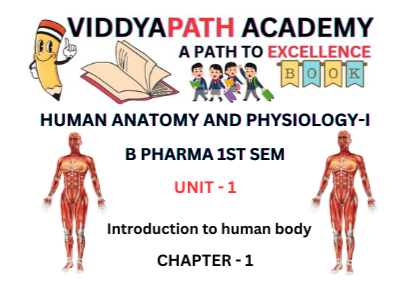
Introduction to Human Body
ANATOMY AND PHYSIOLOGY – The human body is a complex and well-organized structure made up of cells, tissues, organs, and systems that work together to maintain life. It performs vital functions such as breathing, digestion, circulation, movement, and reproduction. Each body system has a specific role, and all systems function in coordination to keep the body healthy and balanced.
What is Anatomy?
Anatomy is the branch of science that deals with the study of the structure of the human body and the relationship between its parts.
It explains how the body is formed and organized.
What is Physiology?
Physiology is the branch of science that deals with the study of functions of the human body and how different organs work.
It explains how the body parts perform their activities to maintain life.
In short:
Anatomy = Structure
Physiology = Function
Scope of Anatomy
The scope of anatomy includes the study of:
- Gross Anatomy – Study of body structures visible to the naked eye
- Microscopic Anatomy (Histology) – Study of tissues and cells
- Developmental Anatomy (Embryology) – Study of growth and development from fertilization to birth
- Surface Anatomy – Study of external body features
- Clinical Anatomy – Application of anatomy in medical practice
Scope of Physiology
The scope of physiology includes the study of:
- Cell Physiology – Functions of cells
- Blood Physiology – Composition and functions of blood
- Nerve and Muscle Physiology – Transmission of impulses and muscle contraction
- Cardiovascular Physiology – Function of heart and blood vessels
- Respiratory Physiology – Breathing and gas exchange
- Digestive Physiology – Digestion and absorption
- Renal Physiology – Kidney function and urine formation
- Endocrine Physiology – Hormonal regulation
- Reproductive Physiology – Functions of reproductive organs
Levels of Structural Organization
The human body is organized into different levels, from simple to complex:
- Chemical Level – Includes atoms, molecules, and compounds (e.g., water, proteins)
- Cellular Level – Cells are the basic structural and functional units of life
- Tissue Level – Group of similar cells performing a common function (epithelial, connective, muscle, nervous)
- Organ Level – Different tissues combined to form organs (heart, lungs, liver)
- Organ System Level – Organs working together to perform major functions (digestive system, respiratory system)
- Organism Level – All systems together form a complete human being
Body Systems
The human body has 11 major organ systems:
- Integumentary System – Skin, hair, nails; protection and temperature control
- Skeletal System – Bones and joints; support and protection
- Muscular System – Muscles; movement and posture
- Nervous System – Brain, spinal cord, nerves; control and coordination
- Endocrine System – Hormones; regulation of body activities
- Cardiovascular System – Heart and blood vessels; transport of blood
- Lymphatic System – Lymph, nodes; immunity and fluid balance
- Respiratory System – Lungs; breathing and gas exchange
- Digestive System – Stomach, intestines; digestion and absorption
- Urinary System – Kidneys; waste removal and fluid balance
- Reproductive System – Reproduction and continuation of species
1. Integumentary System
Definition
The integumentary system is the outer covering of the body, consisting of the skin and its appendages such as hair, nails, sweat glands, and sebaceous glands. It is the largest organ system of the human body.
Components of the Integumentary System
- Skin – The main protective covering of the body
- Hair – Protects the scalp and reduces heat loss
- Nails – Protect fingertips and aid in grasping
Glands
- Sweat (Sudoriferous) glands – Regulate body temperature
- Sebaceous glands – Secrete oil (sebum) to keep skin moist
2. Skeletal System
Definition
The skeletal system is the framework of the body made up of bones, cartilage, joints, and ligaments. It provides support, protection, and movement and plays an essential role in blood cell formation and mineral storage.
In Short (Exam Tip)
Skeletal System = Support + Protection + Movement + Blood Formation
Components of the Skeletal System
- Bones – Rigid structures forming the body framework
- Cartilage – Flexible connective tissue at joints
- Joints – Points where two or more bones meet
- Ligaments – Connect bones to bones
Functions of the Skeletal System
- Support – Gives shape and posture to the body
- Protection – Protects vital organs (skull → brain, ribs → heart & lungs)
- Movement – Works with muscles to produce movement
- Blood Cell Formation – Occurs in red bone marrow (hematopoiesis)
- Mineral Storage – Stores calcium and phosphorus
- Fat Storage – Yellow bone marrow stores fat
3. Muscular System
Definition
The muscular system consists of muscles and their associated tendons that enable movement of the body, maintenance of posture, and production of heat.
In Short (Exam Tip)
Muscular System = Movement + Posture + Heat Production
Functions of the Muscular System
- Movement – Produces voluntary and involuntary movements
- Posture – Maintains body position and balance
- Stability of Joints – Supports and stabilizes joints
- Heat Production – Generates body heat during muscle contraction
- Movement of Substances – Helps in circulation and digestion
4. Nervous System
Definition
The nervous system is the control and communication system of the body. It receives stimuli, processes information, and sends responses to coordinate and regulate body activities.
In Short (Exam Tip)
Nervous System = Sensory input + Integration + Motor output
Functions of the Nervous System
- Sensory Function – Detects internal and external stimuli
- Integrative Function – Processes and interprets information
- Motor Function – Sends impulses to muscles and glands
- Coordination – Maintains balance and homeostasis
Divisions of the Nervous System
1. Central Nervous System (CNS)
- Brain
- Spinal Cord – Controls and integrates body activities
2. Peripheral Nervous System (PNS)
- Cranial nerves
- Spinal nerves – Connects CNS to the rest of the body
5. Endocrine System
Definition
The endocrine system is a system of ductless glands that secrete hormones directly into the bloodstream to regulate and coordinate various body functions such as growth, metabolism, reproduction, and homeostasis.
In Short (Exam Tip)
Endocrine System = Ductless glands + Hormones → Regulation & Homeostasis
Functions of the Endocrine System
- Regulates growth and development
- Controls metabolism and energy balance
- Maintains internal environment (homeostasis)
- Regulates reproduction and sexual development
- Controls stress responses
6. Cardiovascular System
Definition
The cardiovascular system is the transport system of the body. It consists of the heart, blood, and blood vessels, and is responsible for the circulation of blood to deliver oxygen and nutrients and remove waste products.
In Short (Exam Tip)
Cardiovascular System = Heart + Blood + Vessels → Transport & Regulation
Components of the Cardiovascular System
- Heart – Muscular pump that circulates blood
- Blood – Fluid connective tissue
- Blood Vessels – Arteries, veins, and capillaries
Functions of the Cardiovascular System
- Transport of oxygen and nutrients
- Removal of carbon dioxide and wastes
- Transport of hormones
- Regulation of body temperature
- Maintenance of pH and fluid balance
- Protection through immune cells and clotting
7. Lymphatic System
Definition
The lymphatic system is a drainage and defense system of the body. It consists of lymph, lymphatic vessels, lymph nodes, and lymphoid organs, and helps in maintaining fluid balance and immunity.
In Short (Exam Tip)
Lymphatic System = Fluid balance + Immunity
Functions of the Lymphatic System
- Drains excess tissue fluid and returns it to the bloodstream
- Absorbs fats from the intestine (via lacteals)
- Provides immunity by producing and transporting lymphocytes
- Filters harmful substances and pathogens
8. Respiratory System
Definition
The respiratory system is the system of organs responsible for breathing and exchange of gases. It supplies oxygen to the body and removes carbon dioxide produced during metabolism.
In Short (Exam Tip)
Respiratory System = Breathing + Gas Exchange + pH Regulation
Functions of the Respiratory System
- Respiration – Intake of oxygen and removal of carbon dioxide
- Gas Exchange – Occurs in the lungs (alveoli)
- Regulation of blood pH
- Voice production (phonation)
- Olfaction (sense of smell)
9. Digestive System
Definition
The digestive system is a group of organs responsible for breaking down food, absorbing nutrients, and eliminating waste. It ensures the body gets energy and raw materials for growth and repair.
In Short (Exam Tip)
Digestive System = Ingestion + Digestion + Absorption + Excretion
Functions of the Digestive System
- Ingestion – Taking in food and drink
- Digestion – Breaking down food into simpler molecules
- Mechanical digestion – Chewing, churning
- Chemical digestion – Enzymatic breakdown
- Absorption – Nutrients absorbed into blood and lymph
- Transport – Movement of food along the digestive tract
- Excretion/Defecation – Elimination of undigested waste
10. Urinary System
Definition
The urinary system (also called the excretory system) is responsible for removing metabolic wastes from the blood, regulating fluid and electrolyte balance, and maintaining acid-base balance.
In Short (Exam Tip)
Urinary System = Kidneys + Ureters + Bladder + Urethra → Waste Removal & Homeostasis
Functions of the Urinary System
- Excretion of wastes – Removes urea, creatinine, and other toxins
- Regulation of blood volume and pressure – Controls water and salt levels
- Electrolyte balance – Maintains sodium, potassium, and other ions
- Acid-base balance – Maintains blood pH
- Hormone secretion – Produces erythropoietin (RBC production) and renin (blood pressure regulation)
Components of the Urinary System
- Kidneys – Filter blood and produce urine
- Ureters – Transport urine from kidneys to bladder
- Urinary bladder – Stores urine
- Urethra – Excretes urine from the body
Also Read – ADVANCE PHARMACOLOGY 1ST SEMESTER
11. Reproductive System
Definition
The reproductive system is the organ system responsible for producing offspring, ensuring continuation of the species, and supporting sexual development and reproduction.
In Short (Exam Tip)
Reproductive System = Gamete Production + Fertilization + Hormonal Regulation → Continuation of Species
Functions of the Reproductive System
- Production of gametes – Sperm in males, ova (eggs) in females
- Fertilization – Union of sperm and egg to form zygote
- Support of pregnancy – Development of fetus in females
- Sexual maturation – Development of secondary sexual characteristics
- Hormone production – Regulates reproductive functions
Unit 1 Human Anatomy And Physiology 1 – All Chapter PDF Notes
Pingback: BASIC LIFE PROCESSES | HOMEOSTASIS | ANATOMICAL TERMINOLOGY - VIDDYAPATH ACADEMY
Pingback: Structure and Functions of Cell | Transport and Division
Pingback: General Principles of Cell Communication & Signaling
Pingback: Integumentary System: Structure and Functions of Skin